
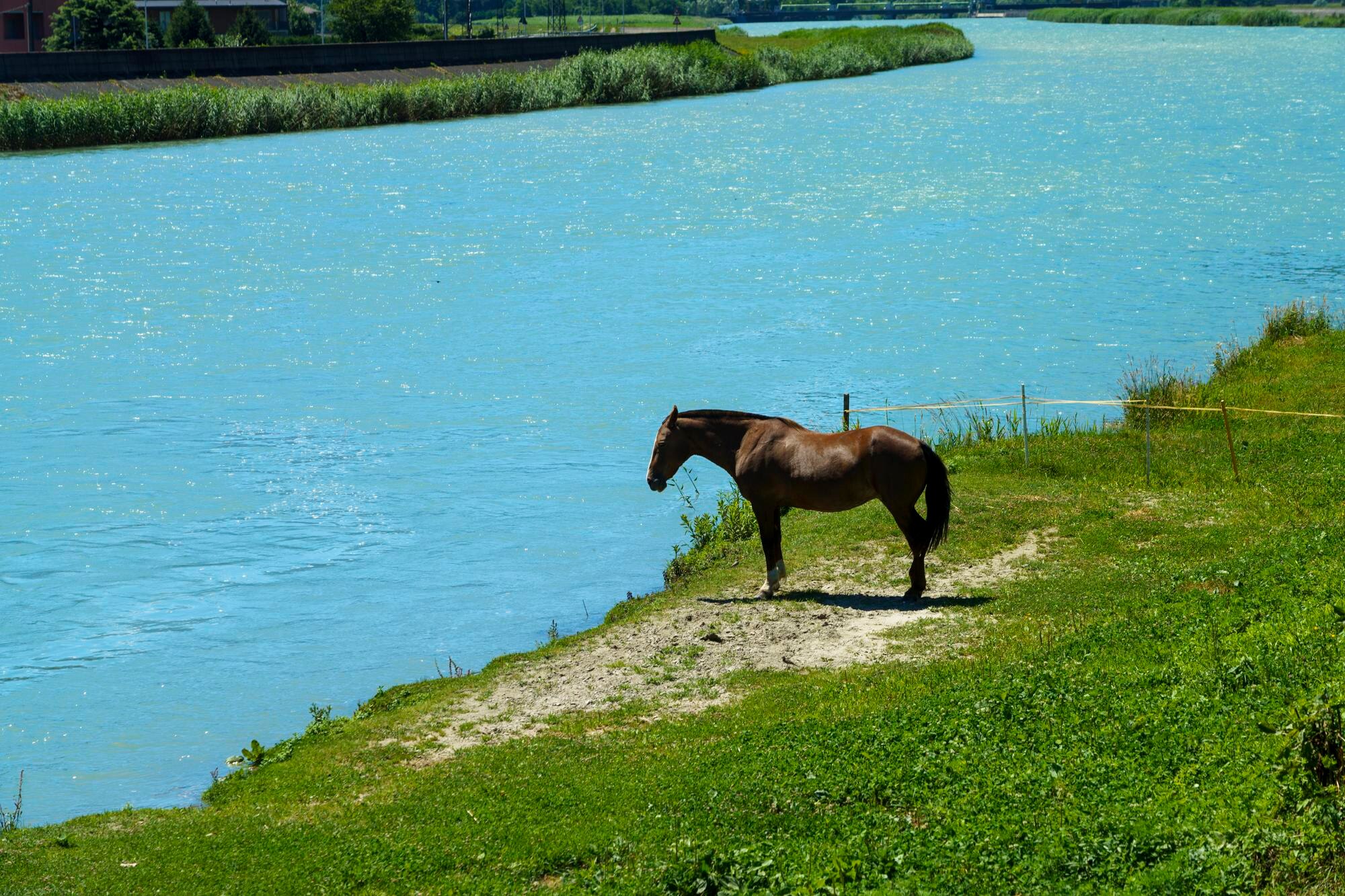
A kelpie is a shape-shifting water spirit in Scottish folklore, often appearing as a horse waiting beside a river to lure someone onto its back. In kelpie mythology, that inviting animal becomes a drowning trap: the rider mounts, cannot get free, and is carried into the water. Sometimes the same creature approaches in human form, with traces of its watery home still caught in its hair.
In This Article
- Where Does the Kelpie Live?
- Why Is the Horse So Dangerous?
- How Can You Recognize or Control One?
- What Happens in the Story of Morphie?
- What Do the Stories Mean?
- How Does the Kelpie Appear Today?
- Key Takeaways
- Frequently Asked Questions
- An Invitation to Distrust Still Water
Where Does the Kelpie Live?
The kelpie Scottish folklore describes usually haunts rivers and streams. A crossing puts its prey within reach: someone who needs to get across has a reason to welcome a loose horse. The bank is familiar ground. The animal makes it dangerous.
The River North Esk gives that danger a particular setting through its association with the kelpie of Morphie. At a ford, the horse’s offer would be practical, not merely beautiful: a way across without wading. The traveller must approach the water to accept it.
Beyond the riverbank lies the territory especially associated with the Scottish Gaelic each-uisge, or “water horse”: lochs and the sea. The names sometimes overlap in retellings, but the setting changes the encounter. A narrow crossing offers the hope of reaching the other side; a loch offers a much greater expanse in which to disappear.
Why Is the Horse So Dangerous?
The kelpie horse turns the ordinary act of mounting into the moment of capture. A person approaches an apparently manageable animal, puts a hand against it, and climbs up. Nothing in that first movement needs to feel reckless. The creature appears to accept the rider.
That acceptance is the trick. Kelpies folklore presents as beautiful horses do not become safe through their willingness to be ridden. The rider expects to direct the animal, but the horse chooses the destination.
In accounts where its skin is adhesive, discovery comes through the body: a hand will not lift away, or the rider cannot slide from its back. Pulling harder does nothing. The horse enters the river with its captive still attached. What looked like transport becomes a restraint, and the skin that held the rider aboard drags them under.
How Can You Recognize or Control One?
A human face offers another way to win someone’s trust. Stories of the kelpie in human form give the disguise an ugly flaw: water weeds remain tangled in the hair, or hooves survive beneath the human appearance. The creature has changed its shape without quite hiding where it came from.
Those details turn an encounter. A person who sees the weeds can recognize the danger before touching the stranger. Hooves make the deception harder to sustain: the supposed human still carries part of the horse.
A magical bridle offers a more aggressive answer. Instead of escaping the creature, a captor can put it to work. The spirit that takes control of a rider must now answer to human commands. In the Morphie story, someone exploits that reversal and discovers that a captive kelpie can remember a grievance.
What Happens in the Story of Morphie?
The laird of Morphie captures a kelpie with a bewitched bridle and forces it to haul stones for a castle. Its supernatural strength now serves a building project. Load after load, the horse does the work its captor demands.
When released, it speaks. Its curse names both the bodily cost and the man responsible:
Sair back and sair banes, Drivin’ the Laird o’ Morphie’s stanes; The Laird o’ Morphie’ll never thrive As lang’s the kelpie is alive!
The Scots words make the complaint physical: a sore back and sore bones from driving the laird’s stones. Then the verse turns against the household’s future. The laird has gained his labour, but the freed creature promises that he will never prosper while it lives.
The bridle has worked. That is what makes the ending bitter: the curse follows a successful capture, not a failed one.
What Do the Stories Mean?
One way to understand kelpie folklore is to read its violence through the danger of a flood. Consider an imagined crossing, not a recorded encounter: a rider brings a horse into a river swollen by rain. The animal loses its footing. For a moment the rider still sits above the current, then both are swept away. The crossing has become a trap before either can turn back.
The kelpie gives that reversal a will of its own. It does not stumble into deep water; it carries someone there. Reading the creature as a personification of floods connects its strength to something a person cannot bargain with or hold back.
That reading explains the drowning threat better than it explains Morphie. There, the creature speaks about work and pain. Its complaint gives the danger another source: the human decision to seize something powerful and assume that making it obey has settled the matter.
How Does the Kelpie Appear Today?
Near Falkirk, Andy Scott’s The Kelpies turn the water horse into two steel horse heads approximately 98 feet high. Steel plates build up their enormous faces and necks. One head lifts upward; the other bends forward. Seen beside the M9 motorway, they loom above passing traffic, giving a familiar animal an unfamiliar scale.
That scale supplies some of the old unease without staging a drowning. A horse’s head is recognizable at once, but these heads dwarf the people beneath them. The sculptures make strength visible through their size and stance.
They also change the encounter. Visitors approach an artwork, not a disguised predator offering a ride. The name carries the folklore into public space, while the steel construction makes clear that this is a contemporary response to the creature, not a reconstruction of one traditional sighting.
Key Takeaways
- Treat the water’s edge as part of the encounter, not background scenery.
- Watch for the moment an ordinary gesture, such as touching a horse, becomes irreversible.
- Read the Morphie curse alongside the capture: the kelpie gets the last word.
- Use flood symbolism to explain the drowning danger without making it explain every tale.
- Approach modern artworks as interpretations with choices of their own.
Frequently Asked Questions
What is the difference between a kelpie and a selkie?
A kelpie is a water spirit often disguised as a horse, while a selkie is a seal-being that takes human form by shedding its sealskin. Selkie stories often turn on marriage, separation, and the recovery of that skin. The crucial object is something the seal-being needs to return home, not something used to trap a rider.
Is a kelpie a fairy?
A kelpie can be classed as a fairy when the word means a supernatural being broadly. “Shape-shifting water spirit” gives a clearer sense of its character than the modern image of a small, winged fairy. Its power lies in changing appearance and drawing people into water.
Are Kelpies Norse or Celtic?
Kelpies belong to Scottish folklore and are commonly placed within the broader context of Celtic traditions. Norse traditions also have supernatural water horses. That shared motif gives the Scottish creature relatives in other storytelling traditions without supplying a single established origin.
Is Loch Ness a kelpie?
Loch Ness is the lake; its famous monster, Nessie, is a separate creature from the kelpie. Scottish water-horse stories form part of the wider tradition of dangerous beings inhabiting lochs. Nessie has its own modern history, while the kelpie’s characteristic encounter begins with a deceptive horse or human appearance.
Can a person escape after touching the water horse?
Yes, some water-horse stories allow a person to escape by cutting off the finger or hand stuck to the creature. The escape costs part of the victim’s body. It is a particularly brutal answer to the adhesive-skin trap: the person gets free by leaving the attached part behind.
An Invitation to Distrust Still Water
To understand a kelpie story, begin with the bargain it appears to offer. Ask what the person wants from the encounter, then follow the moment that apparent advantage disappears. This keeps the action in view before you choose an explanation for it.
Morphie makes a useful starting point because the human gets what he wants. The stones are hauled; the bewitched bridle secures obedience. Yet the curse forces the reader to reckon with what the laird has done to obtain that success. A reading concerned only with dangerous rivers would miss the force of the sore back and bones. Kelpie mythology comes down to encounters in which trust or control fails, and the consequences belong to the person who thought the danger manageable.