
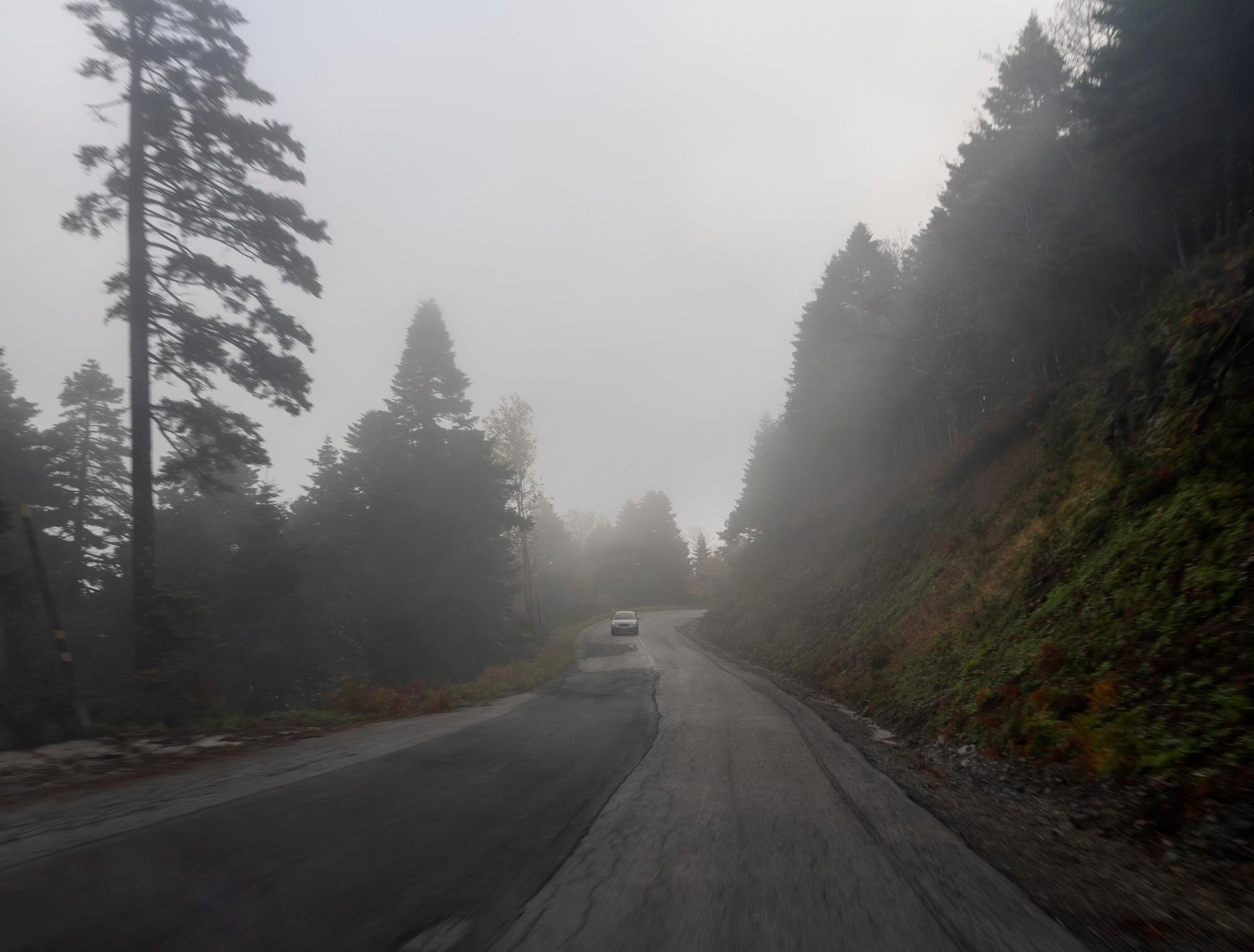
Urban legends are stories told as true about extraordinary encounters, often tied to an ordinary place. A lake hides a drowned settlement; a passenger vanishes on a familiar road. These nine accounts range from Hawaiian spirit traditions to roadside horror, each made memorable by the place where something goes wrong.
Place gives the impossible a foothold. You can drive the highway or stand outside the cemetery, even if the encounter itself remains out of reach. Folklorists call urban legends stories that circulate as true, often through a friend of a friend; they need not happen in cities. Here, the settings do much of the frightening work.
In This Article
- 1. Night Marchers in Hawaii
- 2. Lake Lanier’s Hauntings
- 3. Bigfoot in the Pacific Northwest
- 4. The Chupacabra
- 5. The Jersey Devil
- 6. The Karak Highway Encounter
- 7. The Vanishing Hitchhiker
- 8. The Hook-Handed Killer
- 9. The Babysitter and the Calls From Inside the House
- Key Takeaways
- Frequently Asked Questions
- Local Places Give Legends Staying Power
1. Night Marchers in Hawaii
Torches move along a dark ridge. Drums announce a procession before its figures come into view. In Hawaiian accounts of Night Marchers, often called huakaʻi pō, ancestral spirits travel in ranks, sometimes described as warriors following old routes. The Nuʻuanu Pali area on Oʻahu is among the places associated with these processions.
The frightening part is crossing their path. Some tellings instruct anyone who encounters the marchers to lie facedown and avoid looking at them; the procession follows its course without yielding to the living. Accounts differ over who marches and what protects an accidental witness.
Those differences belong to particular tellers and places. Night Marchers are part of Hawaiian ancestral tradition, not interchangeable figures in a collection of spooky urban legends. Their force comes from the idea that a route people use today may already belong to someone else.
2. Lake Lanier’s Hauntings
Lake Lanier in northern Georgia covers ground where people once lived and worked. Buford Dam created the reservoir in the 1950s, transforming roads and settled land into a lake bottom. Oscarville, a former community associated with the area now partly submerged, gives that loss a name.
The “Lady of the Lake” gives it a figure. Her story is commonly linked to a 1958 accident in which a car carrying two women went off a bridge into the water. Retellings bring a woman back to the shoreline, turning a fatal plunge into an encounter that might happen again. Her appearance and behavior vary from account to account.
There is also a history here that needs no apparition: the racial violence and expulsion of Black residents from Forsyth County in 1912. The reservoir’s altered geography and the county’s dispossession are distinct histories. Collapsing them into a single curse loses the people behind both.
3. Bigfoot in the Pacific Northwest
At Bluff Creek, California, oversized footprints pressed into a dirt road helped bring the name Bigfoot wide attention in 1958. The tracks made an unseen creature measurable: something heavy had apparently crossed ground that people used for work.
The 1967 Patterson–Gimlin film supplied a moving figure. In its famous frame 352, a hair-covered, humanlike subject appears turned toward the camera while continuing across the creekside clearing. That backward glance is the encounter’s enduring moment. Whatever viewers conclude about the disputed footage, it looks like a mutual sighting: the watchers have been noticed.
Bigfoot’s home is the forested Pacific Northwest, where distance and cover give the story room. Indigenous traditions about powerful forest beings have their own identities and should not be collapsed into this modern creature narrative. The Bluff Creek story has its own concrete anchors: tracks in the ground and a brief strip of film.
4. The Chupacabra
In Puerto Rico in 1995, reports of livestock attacks introduced a creature whose name means “goat-sucker.” Around Canóvanas, accounts described animals found dead and supposedly drained of blood. The reported attacker had red eyes; early descriptions often gave it an upright body with spines running along its back.
The name supplied a terrible explanation for what owners found in their pens. It also traveled more easily than a consistent description. Later mainland American reports often featured hairless, doglike creatures, and some examined carcasses proved to be known animals, including canids suffering from mange.
That explains some discoveries, not every story told under the name. The early Puerto Rican figure remains a different proposition: upright beside a livestock enclosure, red-eyed, with a jagged line down its back.
5. The Jersey Devil
The Pine Barrens put miles of woods around the Jersey Devil’s origin story. In the familiar telling, Mother Leeds is expecting an unwanted thirteenth child in 1735. A storm surrounds the birth; the child becomes a creature with wings and hooves and escapes into the night.
The cabin gives the tale a tight beginning. The forest gives it somewhere to go. Its date belongs to the legend, not a verified account of a monstrous birth, but the precise year makes the story sound like something preserved from a family’s past.
A wave of reported sightings in 1909 carried the creature beyond that household story. Another strand of lore claims that the Philadelphia Zoo offered $10,000 for its capture, an unverified reward story that adds the prospect of catching what everyone else merely glimpses. The strongest detail needs no bounty: wings above the pines, where a person on the ground cannot follow.
6. The Karak Highway Encounter
Malaysia’s Karak Highway carries frightening travel stories, including accounts attached to journeys toward Genting Highlands. One circulated encounter begins with a car breaking down around 3 a.m. Steam rises from the radiator. The passengers are stranded on a road that, moments earlier, was simply taking them somewhere.
The breakdown is the decisive event. Inside a working car, the darkness passes on the other side of the glass; once the engine stops, the occupants have to deal with whatever is outside. Getting help means opening a door.
Retellings attach different threats to this highway, so there is no single stable ending to present as the incident. This version is a circulated anecdote. Its grip comes from the pause before anyone steps out, when the car has become a shelter that can no longer move.
7. The Vanishing Hitchhiker
The driver offers a ride. The passenger supplies an address, then disappears before arrival. At the address, someone explains that the passenger has been dead for years. Other versions leave an object behind or carry the discovery to a grave.
Around Chicago, Resurrection Mary gives this traveling plot a local identity. Her story follows Archer Avenue toward Resurrection Cemetery; some versions begin with dancing at the old Oh Henry Ballroom. A young woman accepts a ride after the dance. In some accounts, her hand feels unnaturally cold.
Then come the cemetery gates. The passenger asks to stop, leaves the car and disappears into the burial ground. The ballroom matters as much as the cemetery: the driver has met someone in an ordinary social setting before discovering where she belongs. Of these ghost legends, this is among the most intimate. The stranger has been sitting within arm’s reach.
8. The Hook-Handed Killer
A young couple parks at an isolated lovers’ lane. Over the radio comes a warning: a dangerous escapee with a hook for a hand is nearby. One person wants to leave; the other does not want the evening interrupted.
The warning changes every small noise outside the car. A branch brushing metal might be a hand at the door. When the couple finally drives away, relief lasts only until they find a hook caught on the door handle.
Unlike Resurrection Mary, this story needs no particular cemetery or named road. The parked car supplies its geography, with the couple enclosed and the threat just beyond sight. The hook turns a radio warning into something they can touch. It also gives the sound they heard an explanation: metal scraping against the car door.
9. The Babysitter and the Calls From Inside the House
The children are upstairs. A babysitter downstairs answers a disturbing telephone call, then another. The caller knows enough about the house to make staying by the phone feel less safe with every ring.
When authorities trace the calls, the answer reverses the whole situation: they are coming from inside the house. The babysitter has been watching for an intruder who is already beyond the locked door. The dark stairway is no longer background. It connects the babysitter to the caller and to the children.
The 1979 film When a Stranger Calls helped carry this reversal beyond oral storytelling. Its force lies in timing: the explanation arrives after the household’s ordinary routines have become frightening. Answering the telephone means hearing the threat; going upstairs means approaching it.
Key Takeaways
- A named road or cemetery gives a traveling story a local address.
- A physical trace, such as a footprint or an abandoned object, lets a legend continue after the encounter ends.
- Changing creature descriptions can reveal how a story shifts between regions.
- Ancestral traditions and invented horror plots need different kinds of attention.
- Historical losses can shape a haunting without establishing a supernatural cause.
Frequently Asked Questions
What Is the Most Famous Urban Legend?
There is no authoritative worldwide ranking, but the vanishing hitchhiker is one of the most recognizable recurring plots. Its central surprise survives changes of vehicle or location: a seemingly ordinary passenger turns out to be dead.
What Are Some Urban Legend Monsters?
Bigfoot, the Chupacabra and the Jersey Devil are well-known urban legend monsters. Bigfoot is generally presented as an undiscovered animal, while the Jersey Devil’s birth story gives it a supernatural origin. “Cryptid” refers more specifically to an animal whose claimed existence lacks scientific confirmation.
Are the Night Marchers Part of Hawaiian Cultural Tradition?
Yes, Night Marchers belong to Hawaiian traditions concerning ancestral spirits and place. The encounter rules in different tellings reflect that relationship: the living person must make way for the procession. No single retelling represents every Native Hawaiian’s beliefs.
Is the Philadelphia Zoo Reward Story Verified?
The Philadelphia Zoo reward story remains unverified. Within Jersey Devil lore, the claim turns a feared apparition into a creature someone might capture; it should not be presented as an established zoo offer.
Is the Karak Highway Encounter a Documented Incident or a Circulated Anecdote?
The Karak Highway encounter described here is a circulated anecdote, not an independently established incident. Its late-night breakdown belongs to a broader family of roadside stories in which losing transport also means losing protection.
Local Places Give Legends Staying Power
What these stories share is a change in the meaning of a familiar place. A car offers shelter until it stops on the Karak Highway. A ride becomes something else at Resurrection Cemetery. At Lake Lanier, the water covers land with a human history before any ghost enters the account.
That is why local detail matters more than a general claim that somewhere is haunted. It gives the story a boundary to cross and a reason to remember the crossing. Different traditions put different things on the other side: ancestors, an unknown animal, a dead passenger. Their meanings are not identical. What connects them is the way a place makes an extraordinary encounter feel possible, close and personal. That connection explains their staying power without settling their truth.