
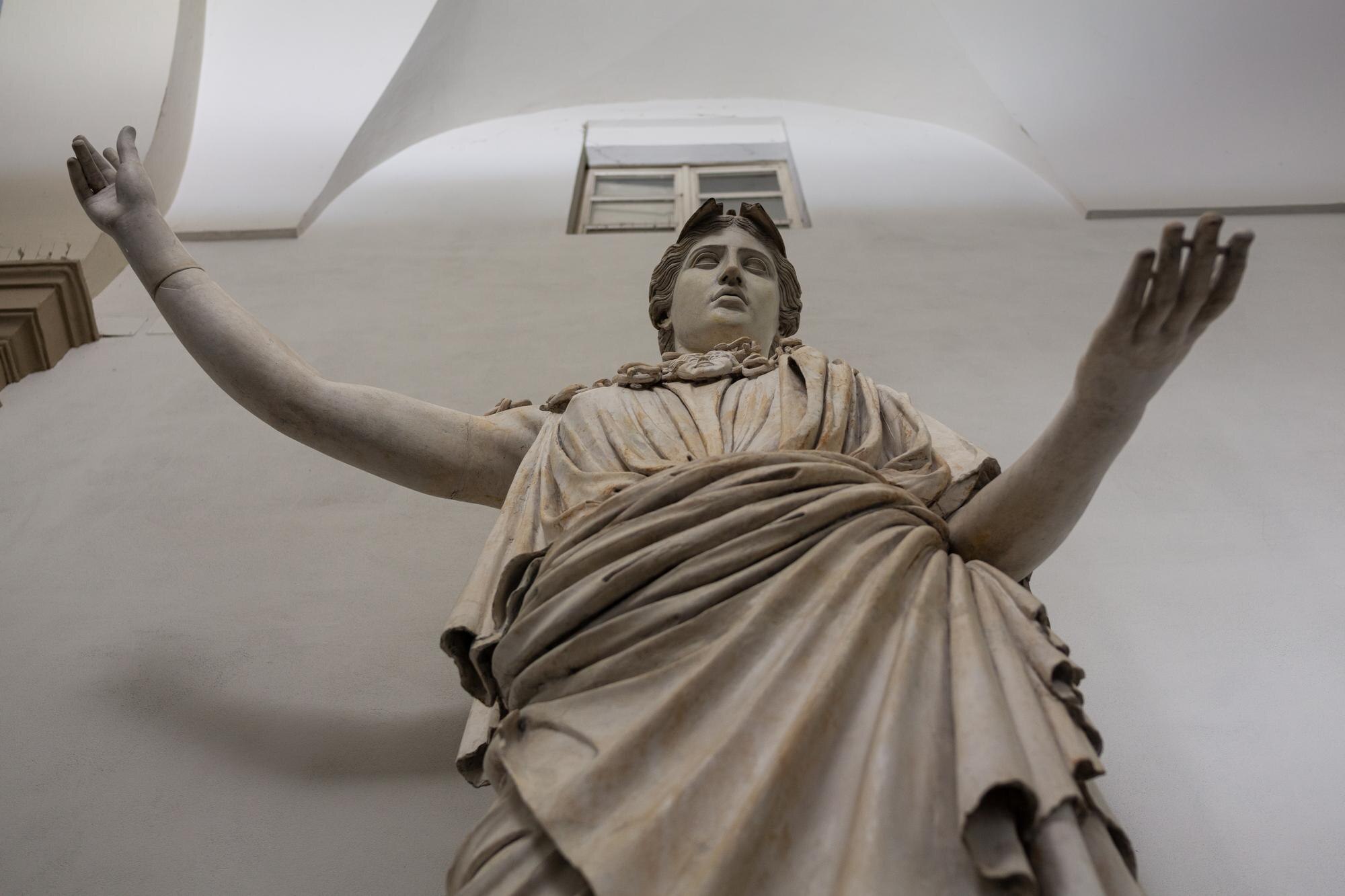
Pagan gods are the deities of pre-Christian religions: Zeus on Olympus, Odin in the Norse world, Isis along the Nile. Many are honored again in modern Paganism, but they come from separate cultures with separate rites, not from one shared religion. A god's principal associations are a starting point. The stories people told about a god, and the gifts they brought, reveal more, so each pantheon below is described through its myths and its worship.
In This Article
- Where the Word "Pagan" Comes From
- Greek and Roman Gods
- Norse Gods
- Egyptian Gods
- Irish Gods
- How Pagans Pray and Make Offerings Today
- Key Takeaways
- Frequently Asked Questions
- Begin With a Deity's Tradition
Where the Word "Pagan" Comes From
Pagan comes from the Latin paganus, meaning someone from a rural district or, in some uses, a civilian. In late antiquity, Christian writers applied it to followers of traditional non-Christian religions. Why they chose that word is still debated.
The label did not name one shared religion. An Athenian pouring wine for Athena and an Alexandrian bringing gifts to Isis followed traditions with different rites and festival calendars. Those differences did not prevent religious exchange: cults travelled, and worshippers sometimes identified foreign gods with their own.
The Metropolitan Museum's account of ancient mystery cults describes Isis's worship spreading into the Greek and Roman worlds and Egyptian gods being identified with Greek ones. A pagan gods list therefore brings together distinct but sometimes overlapping traditions, not one divine family or a single shared creed.
Greek and Roman Gods
Hades carried Persephone off below the earth, and her mother Demeter, the grain goddess, answered by letting the crops fail. The fields stayed barren until Persephone was returned to her for part of each year. The myth tied the planted field to grief and reunion, and those themes were central to the Eleusinian Mysteries.
Demeter's grief shows a pagan goddess acting far outside a single portfolio. A goddess of grain who could starve the world was more than a patron of farming. The other Olympians worked the same way. Zeus governed the sky but also protected oaths. Hera presided over marriage, and Athena governed wisdom and crafts.
Rome retained its traditional Latin gods while adopting Greek divinities. It identified Jupiter with Zeus and Minerva with Athena, though such pairings were never exact.
Worship in both cities was something you did with your hands. Athens honored Athena at the Panathenaia by carrying a newly woven robe to her statue. Roman households set out food and burned incense for the Lares and Penates, the protectors of home and food stores.
Norse Gods
The Norse met their gods at the table. Surviving sources describe blót, a sacrificial feast whose meat was shared between gods and community.
Those texts give the gods hard edges. Odin governed wisdom, poetry, death and battle. Freyja was associated with fertility and magic, and she received half of those killed in battle.
Thor defended gods and humans with his hammer Mjölnir. His defense had a price, and his last fight shows it. At Ragnarök he faces the world-serpent Jörmungandr and kills it. He walks nine steps. Then the serpent's venom brings him down, dead.
Egyptian Gods
Set murdered his brother Osiris and scattered his body. Isis went after the pieces and gathered them. With divine help she restored Osiris long enough to conceive Horus, and Osiris went on to become king of the afterlife.
That story explains the roles. Isis became a goddess of magic and protection, the power that could put a broken body back together. Osiris ruled the dead because he had died. Ra, the sun god, stood with them at the head of a crowded pantheon. Isis's worship later spread far beyond Egypt, through the Roman world.
Daily worship took place behind temple walls. Priests tended the gods' statues with food, incense and clothing. Ordinary people rarely entered the inner sanctuaries. They met their gods when statues came out in festival processions, and at household shrines.
Irish Gods
Lugh's name survives in Lughnasadh, the harvest festival of early August. Brigid was associated with poetry, healing and smithcraft. Traditions about her overlap with those of Saint Brigid of Kildare so closely that the goddess and the saint are hard to tell apart. The Dagda carried a club and a cauldron that never emptied.
The evidence for these pagan deities is uneven. Few ancient accounts survive, and Christian monks wrote down most of the Irish stories we have. Archaeology adds evidence of offerings: the National Museum of Ireland's Kingship and Sacrifice exhibition includes bog butter interpreted as votive deposits in its account of Iron Age ritual. That evidence does not establish offerings to any particular god named here. The surviving stories preserve battles, too.
At the Second Battle of Mag Tuired, Lugh led the Tuatha Dé Danann against the Fomorians. He held command because he had mastered many skills. Balor led the other side. Lugh fitted a stone to his sling and struck Balor in the eye, and the Fomorian fell.
How Pagans Pray and Make Offerings Today
Modern Paganism includes Wicca, Heathenry, Hellenic polytheism, Kemetism and Druidry. Some practitioners reconstruct historical worship. Others combine traditions or draw on personal experience.
Prayer addresses a deity in praise, thanks or request, aloud or in silence. An offering is a gift dedicated to a deity: wine poured as a libation, bread placed on a shrine or incense burned. It need not remain on an altar. Hellenion's Demos Manual, for example, describes offerings consumed by worshippers during the feast. How a gift is presented and treated afterward depends on the tradition and the rite.
Many of these gifts repeat the older rites described above. A Heathen gathering that shares food and drink with the gods follows the pattern of the blót. A Hellenic polytheist pouring wine does what the Athenians did for Athena. Food set before an image on a Kemetic shrine recalls the priests who fed and clothed Egypt's temple statues.
Key Takeaways
- "Pagan" grouped distinct traditions under an outsider's label, but cults also spread and gods were identified across cultures.
- Myths take gods beyond their titles, as Demeter's famine and Thor's nine steps show.
- Each pantheon had its own rites, from the Panathenaia robe to the blót feast to the clothed temple statue.
- Much Norse and Irish myth survives only because Christian writers recorded it.
- Prayer addresses a deity; an offering dedicates a gift. Their combination and the gift's treatment depend on the rite.
Frequently Asked Questions
What is a pagan god?
A pagan god is a deity from a pre-Christian religion, or one honored in modern Paganism. Zeus and Isis are examples, and each belongs to a particular culture, not a shared pagan creed. Pagan goddesses such as Demeter and Brigid fit the same definition.
What does the Bible say about pagan gods?
The Bible forbids worshipping other gods and treats their images as powerless. Exodus 20:3 commands, "Thou shalt have no other gods before me." Isaiah 44 mocks a man who burns part of a log to roast his meat and warm himself, and from the rest "maketh a god, even his graven image: he falleth down unto it, and worshippeth it." Paul calls an idol nothing but warns against taking part in sacrifices to other gods, and Jewish and Christian interpretations of these passages differ.
Is Zeus a pagan god?
Yes, Zeus is a pagan god in the usual sense of the term. Christians classified ancient Greek religion as pagan, and Zeus was its chief god. Some Hellenic polytheists honor him today.
Does a Pagan have to worship only one deity?
No, a Pagan does not have to worship only one deity. Many honor several gods, while others devote themselves to one. No central authority sets a rule for all Pagans.
Can you pray without making an offering?
Yes, you can pray without making an offering. Prayer can stand alone as praise, thanks or request. But a particular rite may pair prayer with an offering; follow that tradition's practice rather than assuming either part is optional.
Begin With a Deity's Tradition
Demeter is more than a goddess of grain. She is the mother who let the fields die until Persephone came back, and that grief shaped the Eleusinian Mysteries. Begin with one deity's own myths and documented rites. A myth stays alive when people act on it, and acting on it well depends on knowing what it says.