
A cryptid is an animal that people say they have seen but that science has never confirmed. Bigfoot and the Loch Ness Monster are the famous ones. Every cryptid sits between two kinds of evidence: what a witness's eyes report, and what a lab can test. The first 11 entries below cover cryptids whose existence remains unconfirmed. The last four cover real-animal discoveries, not necessarily creatures first reported as cryptids.
In This Article
- 1. Bigfoot
- 2. The Loch Ness Monster
- 3. The Yeti
- 4. The Chupacabra
- 5. Mothman
- 6. The Jersey Devil
- 7. Ogopogo
- 8. Mokele-Mbembe
- 9. The Bunyip
- 10. The Almas
- 11. The Skunk Ape
- 12. Giant Squid
- 13. Okapi
- 14. Komodo Dragon
- 15. Coelacanth
- Key Takeaways
- Frequently Asked Questions
- Separate Creature Reports From Verified Discoveries
1. Bigfoot
The 1967 Patterson–Gimlin film, shot at Bluff Creek, California, shows a dark, upright figure striding past a creek bed and turning to glance at the camera. People have argued over those shaky frames for more than half a century.
The name came earlier. In 1958 Jerry Crew found 16-inch footprints at a road-building site in the same area, and newspapers ran with "Bigfoot." After contractor Ray Wallace died, his family brought out the carved wooden feet he had strapped on to make the tracks.
2. The Loch Ness Monster
Sightings at Scotland's Loch Ness surged in 1933. The 1934 Surgeon's Photograph, the long-necked head that became Nessie's portrait, turned out to be a model mounted on a toy submarine.
In 2018 a team sampled the loch's water for environmental DNA, the traces every animal sheds. They found no reptile DNA. They found eel DNA at every site they sampled. Under that dark, peaty surface live plenty of eels, long bodies rolling and twisting in water nobody can see through.
3. The Yeti
In Sherpa and Tibetan Himalayan tradition, the Yeti is a creature of the high snows. Eric Shipton's 1951 photograph of a huge footprint in the snow brought Western expeditions after it for decades.
Then the hair, bone and skin in monastery collections and museum drawers went for DNA testing. Most samples came from Asian black or brown bears. One came from a dog.
4. The Chupacabra
The chupacabra, "goat-sucker," first appeared in Puerto Rico in 1995: an upright creature with spines down its back, blamed for livestock found dead with puncture wounds. When the legend reached Texas and Mexico it dropped onto all fours and lost its hair. The carcasses people brought in were coyotes and dogs with mange so severe their skin had gone bare and leathery.
5. Mothman
On a November night in 1966, two couples driving near the "TNT area," a former World War II munitions site outside Point Pleasant, West Virginia, saw a man-sized grey figure with wings. Its eyes glowed red in the headlights. They said it followed their car down the highway.
Point Pleasant now keeps a Mothman statue and museum. The story turned dark thirteen months after that drive. In December 1967 the Silver Bridge across the Ohio River collapsed at rush hour, killing 46 people, and retellings have tied the winged figure to that disaster ever since.
6. The Jersey Devil
As the Pine Barrens legend tells it, Mother Leeds gave birth to her cursed 13th child in 1735, and it flew off up the chimney on bat wings. In January 1909, a week of reported sightings and strange hoofprints across the Delaware Valley frightened towns so badly that some schools closed. The New Jersey Devils hockey team took its name from the creature.
7. Ogopogo
The name Ogopogo comes from a 1920s song. The lake behind it, British Columbia's Okanagan Lake, belongs to an older story: the Syilx people tell of N'ha-a-itk, a powerful being living in the water near Rattlesnake Island. Before crossing, travelers would make offerings to honor the lake. That is a different thing from a tourist mascot, and Kelowna's statue of a green serpent shows only the mascot.
8. Mokele-Mbembe
In the swamps of Likouala, in the Republic of the Congo, Western searchers went looking for a surviving sauropod: a long neck, a small head, a body like an elephant's. In 1981 American engineer Herman Regusters said he saw a long neck rise from Lake Tele. Since the 1980s, expedition after expedition has come out of the swamp without a bone, a photograph that holds up, or a sample. Local accounts vary: some describe a water spirit or protector of waterways, others a physical creature, including dinosaur-like descriptions shaped by Western influence.
9. The Bunyip
In July 1847 a strange skull found on the banks of the Murrumbidgee River was put on show at the Australian Museum in Sydney as the head of a bunyip, and crowds came to see it. Naturalists later judged it to be the skull of a deformed foal or calf.
The bunyip itself comes from Aboriginal water-being traditions across southeastern Australia. It lives in billabongs, creeks and swamps, and every nation describes it differently. Some say feathers, some fur, some tusks.
10. The Almas
Mongolian and Central Asian accounts describe the Almas as a hairy wild person living on the edges of the steppe. In the Caucasus the same figure is called the almasty.
These stories found a real person in Zana. Historical accounts summarized in Margaryan and colleagues’ 2021 study, The genomic origin of Zana of Abkhazia, describe a tall woman covered with thick hair, captured in the forests of Abkhazia in the 19th century and enslaved by local wealthy individuals. Locals called her an almasty; she bore four children to local men. The study sequenced Zana’s genome and that of her son Khwit, confirming she was human and likely of East African descent, though partial West African ancestry could not be ruled out.
11. The Skunk Ape
Florida's Skunk Ape lives, by witness reports, in the Everglades and Big Cypress Swamp, and everyone mentions the smell first: rotten eggs, wet dog, a dumpster in July. In 2000 an anonymous woman mailed the Sarasota County Sheriff's Office two photographs of a large, orangutan-like ape crouched in the brush near her house, its eyes lit red by the flash. Her letter said it had been stealing apples off her back porch.
12. Giant Squid
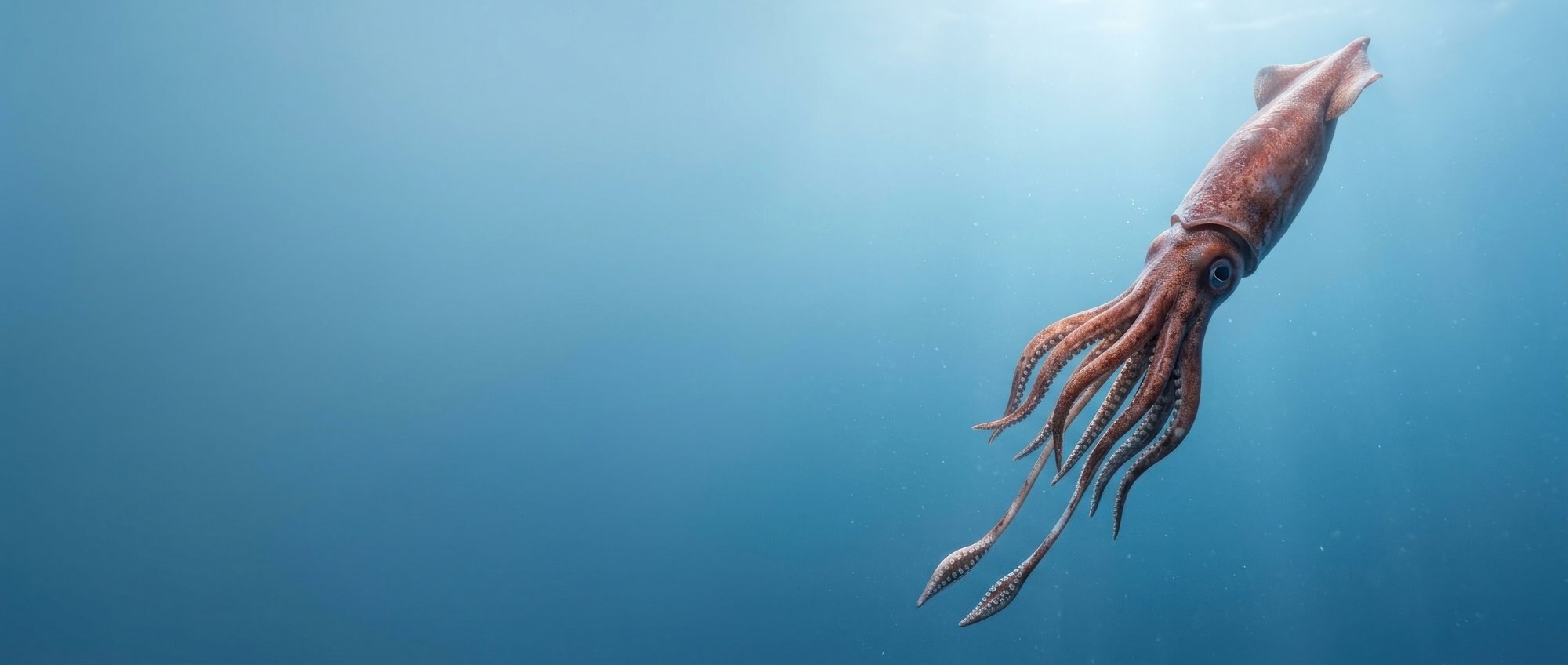
Sailors told stories of the kraken for centuries before Japetus Steenstrup described Architeuthis from washed-up remains in 1857. For generations afterward, scientists relied largely on dead specimens to study the animal.
In 2004 Japanese researchers Tsunemi Kubodera and Kyoichi Mori photographed a live giant squid in deep water off the Ogasawara Islands. It wrapped its arms around a baited line, fought for hours, and tore free, leaving a severed tentacle behind. Video in 2012 showed one swimming in the dark, its body gleaming silver and gold, its eye bigger than a dinner plate.
13. Okapi
Harry Johnston heard Mbuti descriptions of a forest animal in the Congo's Ituri region and first got only strips of its striped skin. Scientists guessed it was some kind of forest zebra. The okapi, described in 1901, has a chocolate-brown body, zebra stripes on its hindquarters and legs, and a long dark tongue that can reach its own ears. It is the giraffe's only living relative.
14. Komodo Dragon
Dutch officials in Indonesia kept hearing about "land crocodiles" on the island of Komodo. They sent a skin and photographs to Pieter Ouwens, who described the Komodo dragon in 1912. The rumor was true. It is the largest living lizard, about 10 feet long, a predator that can kill a deer.
15. Coelacanth
In December 1938 Marjorie Courtenay-Latimer looked through a South African trawler's catch and saw a big blue fish with fleshy, limb-like fins. Scientists thought its group had died out about 66 million years earlier. J. L. B. Smith described it as Latimeria chalumnae in 1939, and a second specimen appeared in 1952.
Key Takeaways
- Testing can identify purported cryptid remains as known animals: the tested Yeti samples came from bears and a dog.
- Hoaxes made some of the best-known images, including Ray Wallace's wooden feet and the toy submarine behind the Surgeon's Photograph.
- Several creatures draw on Indigenous or local traditions, like N'ha-a-itk, the bunyip and Mokele-Mbembe, whose varied accounts include water spirits and physical creatures, before outsiders made them targets of cryptid hunts.
- Specimens established the okapi, Komodo dragon and giant squid as real animals; the living coelacanth was an unexpected rediscovery.
Frequently Asked Questions
What is a cryptid?
A cryptid is an animal or being that people report seeing but that science has not confirmed exists. The term covers old folklore and modern sightings alike. Unconfirmed does not have to mean fake. It means the creature’s existence remains unproven, even if purported remains have been submitted for testing.
What is an example of a cryptid?
Bigfoot is the classic example. The chupacabra is another, and it shows how a creature's description can change as the story travels, from a spiny upright figure in Puerto Rico to a hairless, doglike animal in Texas.
What is the best-known cryptid?
Bigfoot and the Loch Ness Monster are the best known. Bigfoot dominates in North America, while Nessie is recognized around the world.
How many cryptids are there in the US?
Nobody keeps an official count. Definitions vary, and almost every region has its own creature, from Mothman in West Virginia to the Jersey Devil and Florida's Skunk Ape.
Is cryptozoology considered a science?
No, most scientists class cryptozoology as a pseudoscience. It usually starts from a creature it already believes in and looks for support, instead of testing claims against the evidence.
Separate Creature Reports From Verified Discoveries
Cryptid claims depend on reliable identification of evidence, not simply on whether a specimen turns up. Texas chupacabras were brought in and turned out to be coyotes and dogs with mange. A coelacanth came up in a trawler's catch in 1938 and turned out to be what its finders hoped. The okapi's arrival in 1901 proves nothing about Bigfoot. Each claim stands on its own body of evidence.