
The Bloody Mary urban legend has no verified connection to Queen Mary I of England. The queen was real, and her religious persecution explains her grim nickname, but the spirit supposedly summoned through a mirror belongs to folklore. Sharing a name does not establish a shared history.
Understanding the story means separating what people tell from what historians and folklore scholars can document. The mirror challenge has changing rules, while its proposed Tudor origins rest on speculation. This article traces those distinctions, explains why the challenge spreads among children, and examines how an ordinary reflection can become frightening without anything supernatural happening.
In This Article
- What Happens in the Mirror Story?
- What Folklore Scholars Have Documented
- Why Children Keep Passing It On
- Who Was Queen Mary I?
- Why Some Versions Mention a Child
- Why a Reflection Can Look Unfamiliar
- Key Takeaways
- Frequently Asked Questions
- A Historical Queen, an Unproven Connection
What Happens in the Mirror Story?
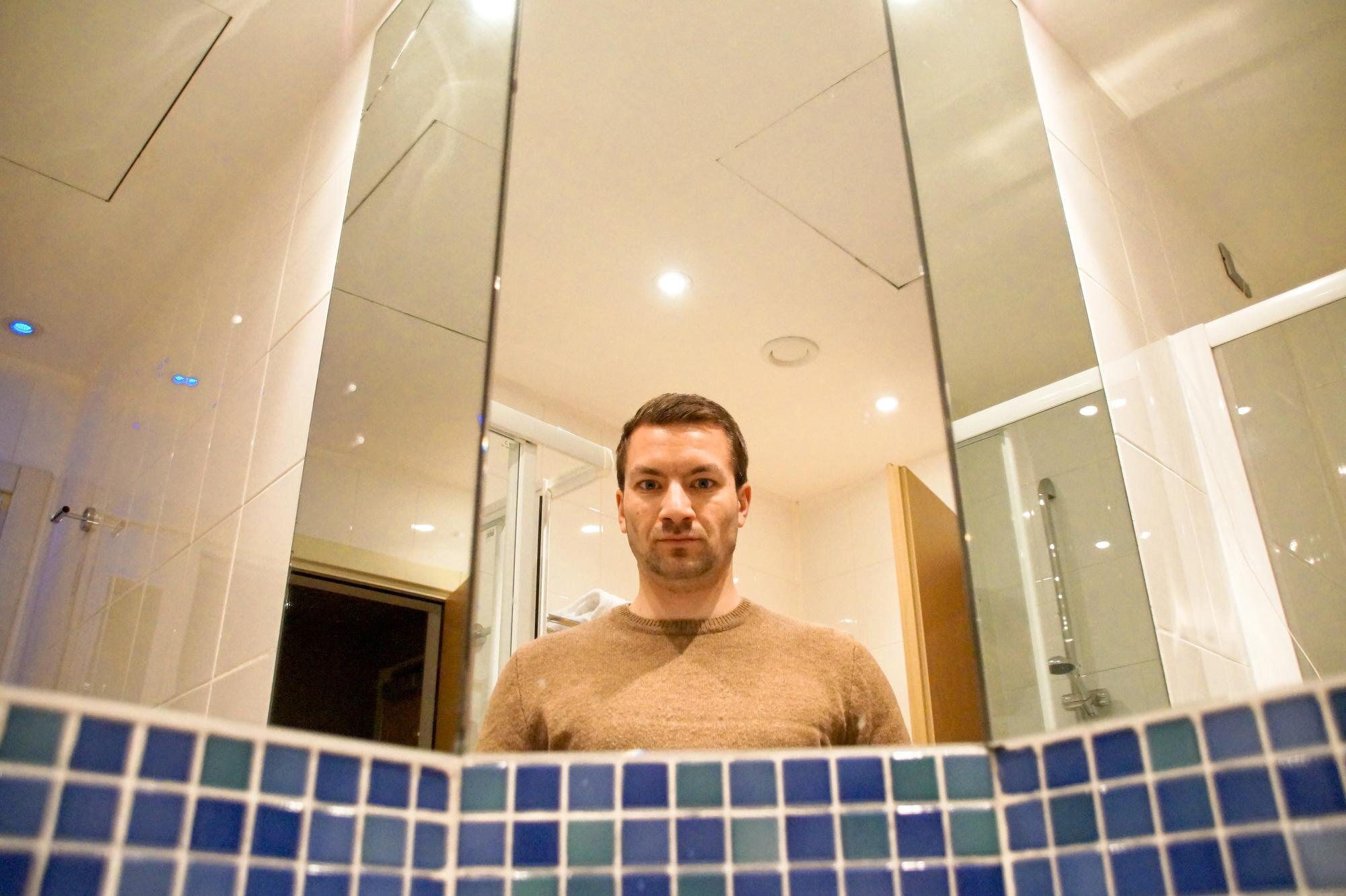
The familiar Bloody Mary story centers on someone facing a mirror and calling a name, expecting a frightening figure to appear. Retellings disagree about the words and the consequences. In some, the figure threatens the participant; in others, the encounter amounts to a terrifying glimpse. Those differences are part of the tradition, not errors that conceal one authentic set of instructions.
That flexibility matters when considering the story’s origins. A name can remain recognizable while the explanation attached to it changes. One teller supplies a murdered woman’s history; another identifies a queen. The Bloody Mary ghost acquires whatever background makes a particular telling persuasive, but a convincing backstory is not evidence that its subject existed. Folklore records what people say and believe, without requiring the events described to have happened.
What Folklore Scholars Have Documented
A firmer chronology comes from published folklore research. Janet Langlois’s 1978 study, “Mary Whales, I Believe in You,” documents a related mirror-summoning tradition. Alan Dundes’s 1998 essay, “Bloody Mary in the Mirror,” examines the bloody mary urban legend and offers an interpretation of its themes. These works establish that scholars were collecting and analyzing the tradition in the twentieth century. They do not establish when someone first told it.
That distinction separates a documented record from a proposed origin. A publication date shows that a tradition existed by that point; it does not identify its inventor or prove an unbroken line back to Tudor England. The different name in Langlois’s title also matters: a mirror legend need not preserve “Bloody Mary” to belong to this family of stories. Its recurring action can be more stable than the identity of the figure being summoned.
Why Children Keep Passing It On
The challenge survives partly because telling it creates something a group can do together. At sleepovers and among schoolchildren, the Bloody Mary mirror ritual becomes a test of courage. Someone explains the rules, someone expresses doubt, and a participant must decide whether to face the mirror. The social stakes are real even when nobody is certain that the spirit is.
Those stakes help explain the story’s transmission beyond any proposed historical identity. Refusing can invite teasing; participating can establish membership in the group. Shared fear gives everyone an experience to discuss afterward, and an ambiguous sound or expression can become the next telling’s evidence. Bloody Mary horror works especially well in this setting because the audience can become the cast. The story does not need a settled biography to function as an informal initiation.
Who Was Queen Mary I?
Queen Mary I of England ruled from 1553 to 1558. A daughter of Henry VIII and Catherine of Aragon, she sought to restore England’s relationship with the Catholic Church after the religious changes under her father and her Protestant half-brother, Edward VI. Her government revived heresy laws, and Protestants were burned during her reign. Those persecutions underlie the hostile historical label “Bloody Mary.”
The label makes her an understandable candidate for later storytellers seeking a famous, frightening Mary. Yet resemblance is not a chain of evidence. Identifying the queen as the mirror spirit requires documentation connecting her life to the ritual, not simply an explanation of why people called her bloody. No historical individual has been verified as the person behind the apparition. Mary I is a proposed inspiration, not a confirmed solution.
There is also a difference between historical responsibility and a ghost story’s characterization. Mary’s policies can be examined through records of her reign. Claims that she appears in glass or punishes people who call her name cannot be established from those records. Keeping the distinction clear avoids turning the queen’s documented persecution into proof of an unrelated supernatural claim.
Why Some Versions Mention a Child
Mary’s reproductive history supplies another proposed connection. During 1554–1555, she and her court anticipated the birth of a child, but no baby arrived. She later believed herself pregnant again, also without a birth. These episodes are commonly described as false pregnancies, although a precise medical explanation cannot be securely reconstructed from the surviving historical evidence.
That history can make child-related versions of the legend feel biographically convincing. Some retellings have the participant accuse Mary of losing or harming a baby. Linking those words to the queen’s disappointed expectations produces an emotionally coherent explanation, but coherence is not proof of transmission. There is no established documentary chain showing that her pregnancies generated those particular lines. The connection remains a theory about why certain versions might have taken their shape.
The distinction also protects against a misleading claim about Mary herself. Her anticipated pregnancies do not establish that she had a child who was stolen or killed. A threatening line spoken in a folklore ritual is evidence of the story’s content, not a reliable account of a historical woman’s life.
Why a Reflection Can Look Unfamiliar
The experience described in a Bloody Mary legend does not always require a deliberate prank. Dim lighting and prolonged mirror-gazing can make a familiar face look distorted or strangely unfamiliar. Giovanni Caputo’s 2010 study of the “strange-face-in-the-mirror” illusion documented unusual face perceptions under such viewing conditions. It offers a perceptual explanation for an unsettling experience without establishing an apparition.
Under poor viewing conditions, visual information becomes less reliable, and sustained attention can change how facial features appear. Expectation supplies an additional influence: someone waiting for a threatening face has a ready explanation for an ambiguous reflection. That does not mean every reported encounter has one identical cause. It means that sincerely seeing something frightening is not, by itself, evidence that a separate being occupied the mirror.
A perceptual account also helps explain why the ritual can remain convincing after a participant learns that it is folklore. Knowing that a distortion is possible does not necessarily prevent it from feeling disturbing. The fear can be genuine while the supernatural interpretation remains unsupported. That difference is central to understanding why a simple mirror challenge can produce such memorable accounts.
Key Takeaways
- Queen Mary I was a historical ruler; the mirror spirit belongs to folklore.
- Mary’s religious persecution explains her nickname, not a proven origin for the legend.
- The mirror ritual and its threatened consequences vary between retellings.
- Mary’s false pregnancies offer a proposed connection to child-related versions.
- Neither a single historical inspiration nor the supernatural claims are established.
Frequently Asked Questions
What is Bloody Mary?
Bloody Mary is a folklore figure associated with a mirror-summoning challenge. The term can also refer to Queen Mary I’s historical nickname or to a cocktail, so context matters. Here, it means the figure in the legend, not an established historical identity.
Does every version require the same number of repetitions?
No. Three repetitions are familiar in some tellings, while others prescribe a different count or a longer invocation. The count functions as a local rule passed between participants, not an authenticated requirement.
Does the ritual always take place in a bathroom?
No. Bathrooms are a familiar setting because they offer a mirror and a door that separates the participant from the group. Other tellings require only a mirror in a darkened space, so the room itself is not a universal feature.
Is a candle essential to the story?
No. Some versions include candlelight, while others describe darkness or weak lighting without specifying its source. A candle adds atmosphere, but it is neither a defining requirement nor worth introducing an open-flame hazard.
Does the spirit always attack the person at the mirror?
No. Some tellings threaten scratches or death, while others describe an appearance without physical harm or give the figure a fortune-telling role. These are variations in the story’s promised outcome, not documented consequences.
Do all versions include a reference to Mary’s child?
No. Child-related accusations belong to some versions, while others use only the spirit’s name. Their absence from other tellings is one reason the queen’s reproductive history cannot explain the whole tradition.
A Historical Queen, an Unproven Connection
The clearest answer is that Bloody Mary has a documented folklore history and a speculative royal identity. Langlois’s study gives us a concrete record of a mirror-summoning tradition; Mary I’s life gives us a possible association, not proof that she inspired it. Those are different kinds of evidence.
To understand a particular retelling, distinguish its claims about the past from the experience it promises participants. A threatening reflection can be discussed through perception, while the challenge’s appeal can be understood through shared fear and group pressure. Neither requires a historical queen behind the glass. The story remains unsettling, but its power does not turn its proposed origins or supernatural claims into established facts.