
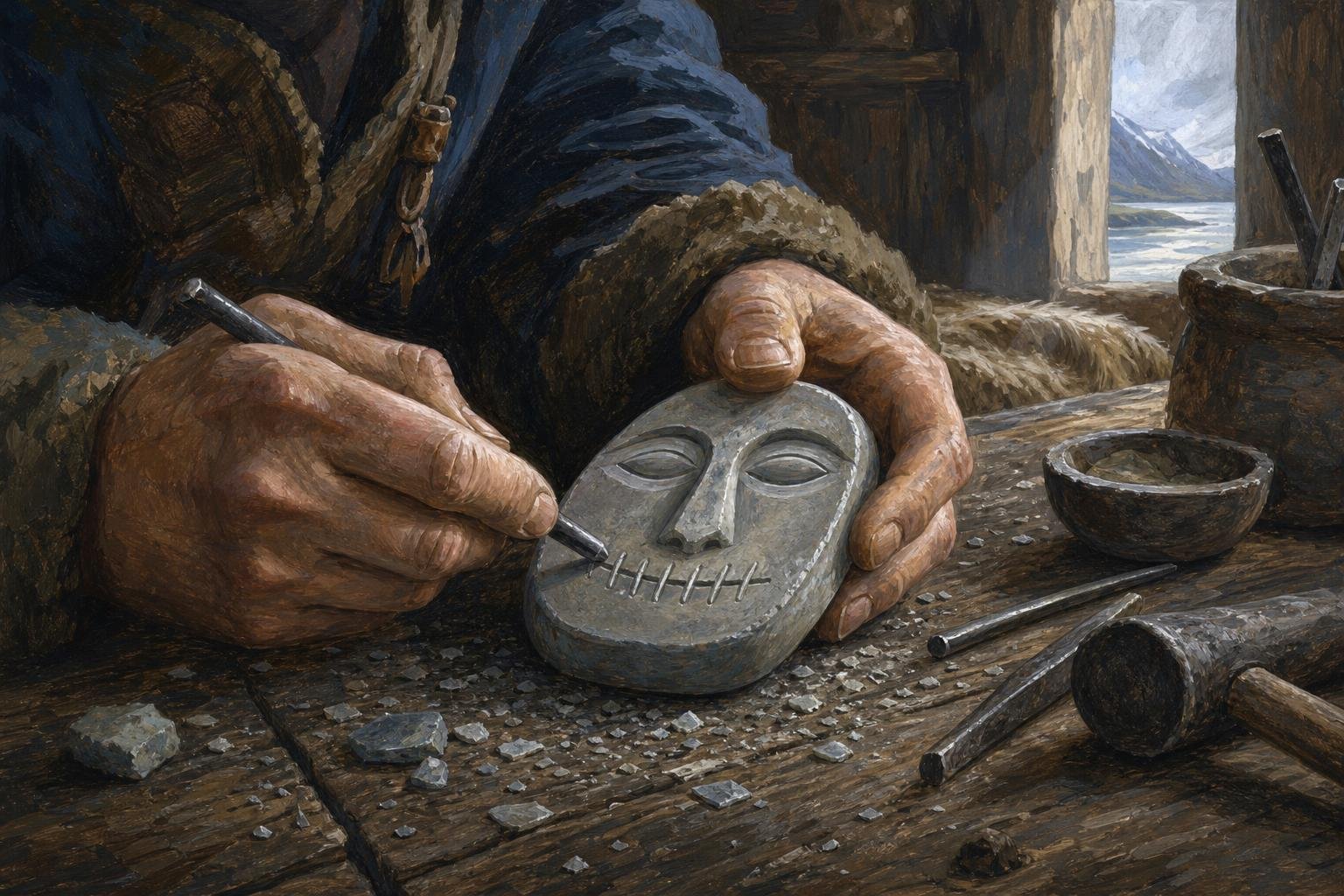
Loki turns against the gods he once helped, becoming one of their enemies at Ragnarök. Through Loki, Norse mythology gives us a shape-shifter of jötunn ancestry whose cunning brings the gods both precious gifts and devastating losses. His family and adventures explain how a resourceful companion becomes a dangerous opponent.
In This Article
- Where the Stories About Loki Come From
- Loki’s Parents and Place Among the Gods
- Loki’s Children and Unusual Family
- Loki’s Powers and Animal Associations
- How Loki Helps the Gods
- The Quarrel That Leads Toward Ragnarök
- How Marvel Changed Loki
- Key Takeaways
- Frequently Asked Questions
- Understanding Loki Through His Contradictions
Where the Stories About Loki Come From
Loki’s principal literary sources are the Poetic Edda and Snorri Sturluson’s Prose Edda. The first gathers anonymous mythological and heroic poems; the second, composed around 1220, explains traditional poetry and retells myths. Both preserve pre-Christian traditions through medieval Icelandic writing in a Christian-era setting.
The poems can be startlingly direct. In Þrymskviða, a plain-English rendering of one line reads: “Thor alone ate an ox, eight salmon.” That enormous appetite threatens a deception Loki must keep alive. Loki mythology moves between such comedy and lethal conflict, sometimes within the same adventure.
Loki’s Parents and Place Among the Gods
Loki’s father is Fárbauti, a jötunn or giant; his mother is Laufey, also called Nál. Yet his daily company is the Æsir. He travels with Thor and claims a bond with Odin strong enough to secure him a seat among the gods.
That claim becomes a weapon at Ægir’s feast. In Lokasenna, Loki reminds Odin that they once mixed their blood and that Odin promised not to accept a drink unless Loki received one too. Odin has a place made for him. Loki gets his drink, then turns on his hosts.
Labeling Loki a Norse god suggests a settled position that these encounters hardly support. His access rests on relationships, including blood brotherhood with Odin, not adoption into Odin’s family.
Loki’s Children and Unusual Family
With the jötunn Angrboða, Loki fathers Fenrir, the great wolf; Jörmungandr, the serpent associated with the sea surrounding the human world; and Hel, ruler of a realm of the dead. In Snorri’s account, the gods treat them as threats and act to contain or remove them. Their father’s children become enemies the gods cannot simply put behind them.
Loki also has a wife, Sigyn, and children whose names vary across the surviving accounts. His family extends in another direction when he takes a mare’s form to distract the stallion Svaðilfari. The stallion follows him away from its work, and Loki later gives birth to Sleipnir, Odin’s eight-legged horse.
Here the shape-shifter becomes a mother. The horse is the lasting result of a trick that requires far more than changing his appearance.
Loki’s Powers and Animal Associations
Loki’s transformations let him interfere at close range. During the making of the gods’ treasures, he becomes a fly and bites the dwarf Brokkr as he works the bellows. One bite strikes his eyelid; blood runs into his eyes, and his work falters. The result is a flaw in Thor’s hammer: its handle is short.
A salmon’s body offers Loki a different advantage when he needs to escape the gods. He takes to the water, but the transformation cannot save him from capture. Speed and cunning have limits.
Other journeys depend on equipment: Loki borrows Freyja’s feather garment to travel in bird form. Calling him Loki the trickster god captures this readiness to use whatever an encounter demands. His animal associations follow these particular adventures, while wolves and serpents can also evoke his children.
How Loki Helps the Gods
A recurring pattern links Loki’s adventures: he causes damage, comes under pressure, and repairs the damage through another deception. After cutting off Sif’s hair, he must obtain a replacement. His dealings with dwarven craftsmen bring the gods treasures, including Mjölnir. The weapon with the flawed handle becomes essential to their defense.
In Þrymskviða, that defense disappears when the giant Þrymr steals the hammer and demands Freyja as his bride. Thor goes in her place, dressed in bridal clothes and a veil, with Loki accompanying him as an attendant.
The disguise nearly collapses at the wedding feast. Thor eats with alarming enthusiasm, and his eyes frighten the groom. Loki supplies explanations: the bride has been too excited to eat or sleep before the wedding. His quick answers keep Þrymr reassured until the hammer is brought within Thor’s reach. This Loki myth makes the liar the indispensable partner in recovering a stolen weapon.
The Quarrel That Leads Toward Ragnarök
The cooperation does not last. In Lokasenna, Loki exchanges accusations and insults with the gods at Ægir’s feast. Having secured entry through his bond with Odin, he attacks his hosts’ reputations, and they answer with charges against him. Thor finally threatens him with violence, ending the confrontation.
Other accounts make that hostility deadly. In Snorri’s telling, Loki arranges Baldr’s death by directing the blind Höðr to strike him with mistletoe. He also frustrates the attempt to recover Baldr from the dead. This is calculated harm, far beyond the destructive joke played on Sif.
The gods eventually bind Loki beneath a venom-dripping serpent. Sigyn catches the poison in a basin, but she must empty it; whenever she does, the venom reaches him again.
At Ragnarök, Loki escapes and joins the forces opposing the gods. He confronts Heimdall, and they kill each other. The former companion now fights on the side of the gods’ destruction.
How Marvel Changed Loki
Marvel turns Loki’s unstable place among the gods into a family conflict: he is Odin’s adopted son and Thor’s adoptive brother. Marvel also makes Laufey his biological father, changing the parentage given in the medieval accounts. For viewers, rivalry with Thor becomes a struggle over belonging and their father’s approval.
That emotional focus softens the distance between the audience and a character capable of cruelty. It gives his betrayals the language of wounded brotherhood and makes redemption a recurring possibility. Marvel’s Loki still does harm, but brotherly angst supplies a sympathetic explanation that the Baldr story does not offer. Norse Loki engineers a death and obstructs its reversal; the older account gives that choice its full weight.
Key Takeaways
- Treat Loki’s family ties as part of the plot: the gods’ treatment of his children helps shape the coming conflict.
- Follow what each deception accomplishes; the same ingenuity can recover a weapon or arrange a death.
- Keep Marvel’s adoptive-family story separate from the medieval relationships.
- Connect animal imagery to an episode or a family member, rather than assuming one emblem explains him.
Frequently Asked Questions
What is Loki the Norse god of?
Loki is commonly called the Norse god of mischief and trickery because deception drives his adventures. That describes his behavior, not an exclusive office assigned by the medieval sources. His transformations do not make him a fire god.
Is Loki evil or just mischievous?
Loki commits deliberate evil in the Baldr story and plays a helpful role in recovering Thor’s hammer. The difference lies in what he chooses to accomplish, not in whether he uses deception. His tricks can save lives or destroy them.
How is Loki related to Odin?
Loki is Odin’s blood brother, not his adopted son in the medieval accounts. Their drinking pledge gives Loki leverage at the feast in Lokasenna. The poem invokes their pact without narrating its original ceremony.
Who killed Loki in Norse mythology?
Heimdall kills Loki at Ragnarök, and Loki kills Heimdall in the same encounter, according to the Prose Edda. Their mutual death belongs to the foretold final conflict. Loki survives his earlier capture and binding.
Why is Loki LGBTQ?
Loki resonates with some LGBTQ readers because he changes bodily sex and becomes a mother. His pregnancy with Sleipnir gives that connection a concrete basis in the mythology. LGBTQ is a modern interpretive framework here, not an identity label used by the medieval texts; Marvel’s treatment belongs to its adaptation.
What animals are associated with Loki?
Loki becomes a mare, a salmon, and a fly in different stories. Bird imagery also connects to his use of Freyja’s feather garment. A wolf or serpent may instead refer to Fenrir or Jörmungandr, his children.
Understanding Loki Through His Contradictions
Loki’s contradictions come down to responsibility: cleverness does not decide whether an action is good. His explanations at Þrymr’s feast help Thor recover a weapon; his instructions to Höðr make another weapon fatal. In both cases, he understands how to move someone toward the outcome he wants.
That makes him more troubling than a harmless prankster and more compelling than a villain who only destroys. The gods benefit from abilities they cannot safely trust. Their dependence gives his eventual betrayal its force. Loki’s place in Norse mythology rests on that tension: a companion can be essential to a community and still choose to bring it terrible harm.